What's in This Guide
The whole thing takes about 2-3 minutes. Sometimes less. You wait in line for hours, go through security, get your fingerprints scanned, and then stand at a window talking to an officer through glass. No chair. And that's where your US trip gets decided.
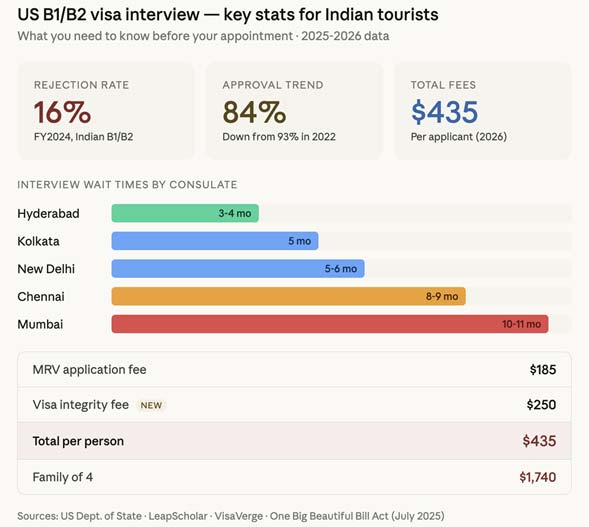
For Indian B1/B2 applicants, the approval rate has been sliding — from 93% in 2022 down to roughly 84% by 2024. So about 1 in 6 people walk out with a rejection. The thing is, most of those rejections aren't about paperwork. They're about what you said. Or how you said it.
What the Officer Actually Cares About
Here's something most people don't realize: under US immigration law, you're already "guilty." Section 214(b) says every applicant is presumed to be someone who wants to immigrate permanently. The officer's default position is no. Your job is to change their mind in 60 seconds.
Three things. That's all they're evaluating:
- Is your reason to visit real?
- Can you pay for it?
- Are you coming back?
Everything else — your clothes, your English, your nervousness — doesn't matter nearly as much as people think.
The Questions (and What They Actually Mean)
You'll get asked maybe 3-5 questions. Not 20. Here's what comes up for tourists:
| Question | What they're really asking |
| "Purpose of your visit?" | Did you plan this trip or are you making it up? |
| "How long will you stay?" | Does this make sense for tourism? |
| "Who's funding the trip?" | Is the money real? |
| "Do you have family in the US?" | Are they the real reason you're going? |
| "What's your job?" | What's pulling you back to India? |
The biggest killer: vague answers.
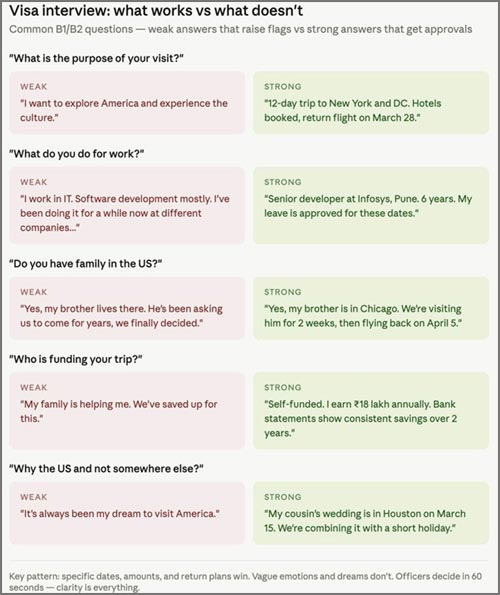
This gets you rejected: "I want to see America and experience the culture."
This gets you approved: "12-day trip. New York and DC. Hotels booked on MakeMyTrip, flying back March 28th."
Dates. Cities. Return flight. That's what the officer wants to hear. Not your dreams about America.
By the way — if you want to see the full list of B1/B2 questions that officers actually ask (not the recycled lists from 2019), there's a solid collection sorted by visa type here. Pretty useful to scroll through the night before your appointment.
Nobody Told You About the $435
Quick reality check on costs. This catches a lot of people off guard.
The US slapped on a new $250 Visa Integrity Fee in July 2025. Add that to the existing $185 MRV fee and you're at $435 per person. Family of four? ₹1,46,000+ in government fees alone. Before you've booked a single flight.
The $185 is gone even if you get rejected. Non-refundable. The $250 kicks in only if approved — but there's technically a refund process that the government... hasn't built yet. So yeah. Don't count on getting any of it back.
This is why preparation matters more than it used to. Getting rejected isn't just disappointing anymore. It's expensive.
Wait Times — and Why Your City Matters
This is something people figure out too late. The difference between consulates is insane:
Consulate and Wait
Hyderabad: 3-4 months
Kolkata: ~5 months
New Delhi: 5-6 months
Chennai: 8-9 months
Mumbai: 10-11 months
Mumbai. Almost a year. If you're in Mumbai and can travel to Hyderabad for the interview — do it. You'll save 7 months of waiting.
Also: apply in January-March. Summer is peak season. Wait times go up 25-30% just because everyone decides to apply at the same time.
]
Ready to Experience This Yourself?
Let Swastik Holiday help you plan your own trip, with expert guidance and the best local rates.
Explore India Tour Packages →Bring Everything. Show Nothing (Unless Asked)
Weird rule of thumb but it works: carry every document you own but don't hand anything over unless the officer asks for it.
What to have in your folder:
- Passport (valid 6+ months beyond travel)
- DS-160 printout
- Appointment letter
- Bank statements, 6 months
- ITR for 2-3 years
- Employment letter (should mention leave approval — this matters)
- Hotel bookings + return flight
- Property papers if you have them
- Invitation letter if visiting someone
Some officers ask for documents. Some don't look at a single one. You can't predict it. But pulling out a neatly organized folder when asked? That itself sends a signal. Fumbling through a pile of loose papers sends a very different one.
Oh and one more thing — don't use a flip file. Some embassies literally don't allow them through security. A clear plastic folder works fine.
The Mistakes I Keep Seeing
Over-talking. Officer asks what you do for a living. "Senior accountant, Deloitte Mumbai, 8 years." Done. You don't need to describe your department structure or your career journey. More words = more chances to say something wrong.
The family trap. "My brother's been in New Jersey for 12 years, he keeps asking us to come." You just told the officer you have a strong personal connection to someone who's already settled in the US. That's a flag. Say instead: "Visiting family for two weeks, return tickets booked." Short. Clear. No emotional backstory.
Blank stare when asked about itinerary. If you can't name the cities you're visiting? Game over. The officer now thinks you don't actually have a plan — which means you might not actually be going for tourism.
How to Prepare Without Sounding Prepared
This is the tricky part. Memorized answers are the worst thing you can do. Officers hear hundreds of people a day. They know when someone's reciting a script.
What actually works: practice out loud with someone. Not reading from notes. Just have a friend throw questions at you — "where are you going?", "why?", "how much did the tickets cost?", "when are you coming back?" — and respond like you're talking to a real person. Because that's exactly what the interview is.
If you want to go further — Permito.ai simulates the actual consular interview with AI. It pushes back on your answers, tells you where you're weak, gives you a feel for the pressure. Honestly, even doing it once makes a difference. You stop being nervous about the unknown because you've already been through it.
Got Rejected? Now What
Happens to 16% of Indian applicants. It's not a ban.
No waiting period to reapply. You could technically go back the next day. But unless something has actually changed — better bank balance, new job, property, clearer itinerary — you're just donating another $185 to the US government.
One thing worth trying: ask the officer right there what they'd suggest bringing next time. Half of them won't answer. But some do, and that information is gold.
The interview isn't a test with right answers. It's a conversation where someone decides in 2 minutes whether your story adds up. Specific plans, real money, a life in India that you're obviously going back to. That's it. Keep it simple, keep it honest, and you'll be fine.